Roulette ndi Maphunziro a Masamu
Gudumu la roulette limapangitsa kuthekera kukhala kosavuta kuganizira m’maganizo. Umu ndi mmene mungaligwiritsire ntchito pa phunziro popanda kulimbikitsa kutchova juga.
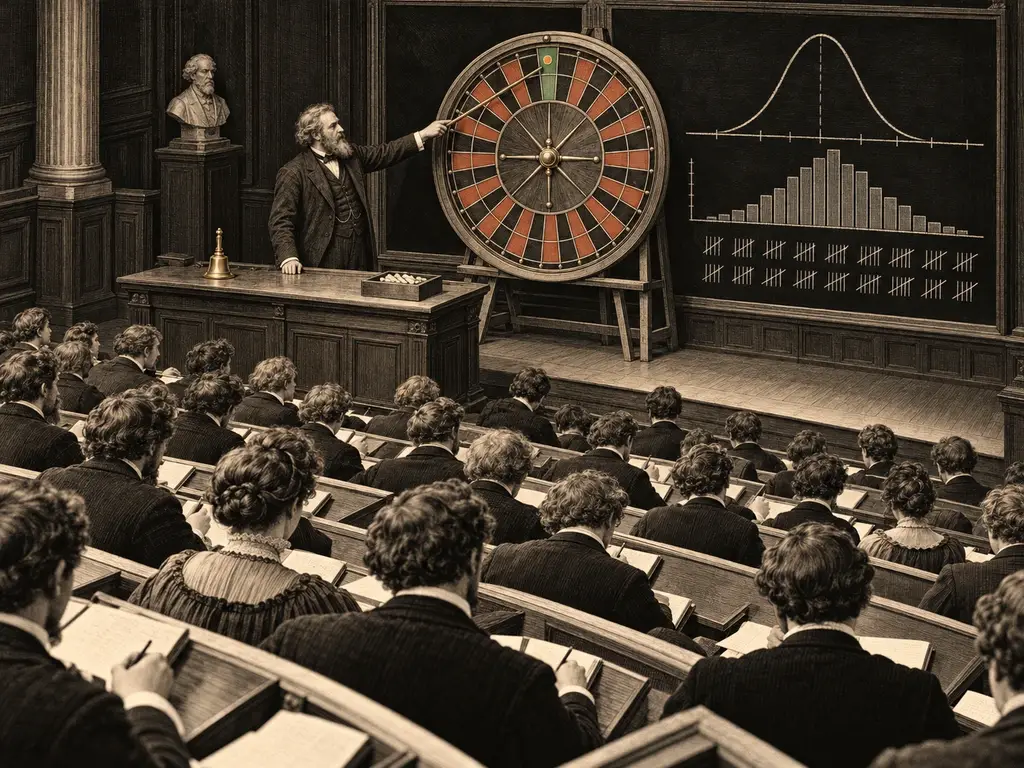
A model with 37 equally likely, independent outcomes connects counting, expectation, variancemasamuKusinthasinthaMuyeso wa kufalikira kwa zotsatira kuzungulira mtengo woyembekezeka. Kwakukulu pa straight up, kochepa pa mabetcha a even-money.Werengani yonse →, repeated events and hypothesis testing. State the assumptions, use simulated outcomes without real stakes, and distinguish a mathematical result from a claim about how students learn.
N’chifukwa chiyani roulette
A fair single-zerogudumuZiroKabowo kamodzi kobiriwira kamene betcha la even-money, dazeni kapena mzati siliphimba; gwero la phindu la kasino. Imatchedwanso: ziro imodzi, 0.Werengani yonse → roulette model offers 37 outcomes and a convenient payoutndalamaMalipiroZimene betcha lopambana limabweza, zotchulidwa ngati “X ku 1” kuwonjezera pa ndalama zobetcha zobwezedwa.Werengani yonse → formula. It is one example among many: coins, dice and cards can also illustrate probabilitymasamuKuthekeraMwayi wa zotsatira, kuchokera 0 mpaka 1 kapena 0% mpaka 100%. Nambala imodzi: 1/37 = 2.70%.Werengani yonse →, repeated outcomes and statistical tests. Drawing cards with replacement gives a different model from drawing without replacement.
Uniformity and independence are assumptions to examine, not properties guaranteed by a wheel’s appearance. For a standard bet covering n numbers and paying 36/n − 1 unitsndalamaUnitNdalama zobetcha zoyambira zimene dongosolo kapena wosewera amagwiritsa ntchito. Maprogression amafotokozedwa mu ma unit kuti agwire ntchito pa tebulo lililonse.Werengani yonse → of profit on a win, the expected net result per unit staked is −1/37. Special payouts and zero rules change that result.
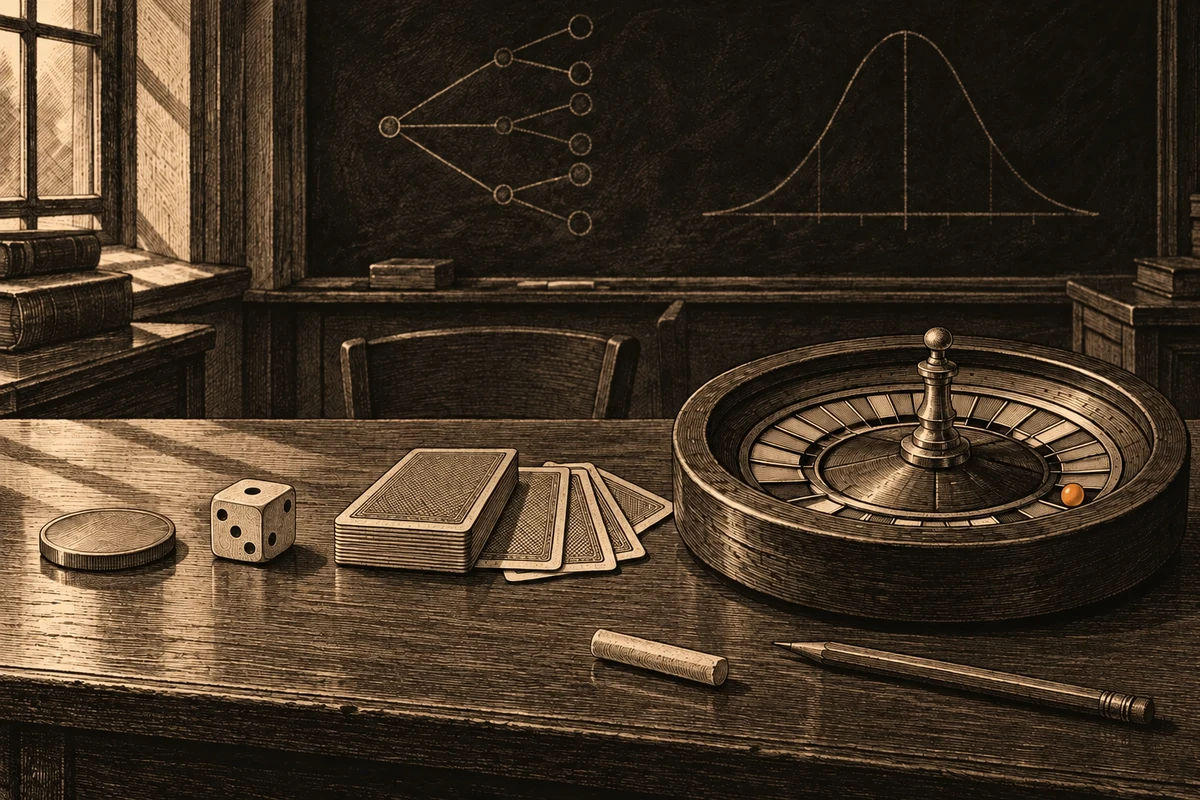
Ndandanda ya maphunziro
Zitsanzo izi zimaganiza zotsatira zodziyimira payokha ndi za mwayi wofanana pa 0–36 pokhapokha ponenedwa zina.
Kuphunzitsa popanda kuphunzitsa kutchova juga
Keep real money out of the activity. A spreadsheet or a set of numbered tokens can reproduce the mathematics without a casino setting. Choose the framing for the learners and the institution; a negative-expectation explanation alone does not establish that a gambling-themed activity is suitable for every class.
Ask learners to state the sample space, payout and independence assumptions before calculating. A simulation illustrates variability; one losing session is not a proof that a system fails, and one winning session is not evidence that it works.
Zochita zimene zimagwira ntchito
Compare predictions with calculations, without presenting invented guesses as classroom data. For the birthday problemmasamuVuto la tsiku lobadwaKuchuluka kwa anthu kofunikira kuti awiri mwina agawane tsiku lobadwa, kapena kuchuluka kwa kuzungulira kuti nambala mwina ibwerezedwe. Pa gudumu la tibowo 37, kuzungulira 8 nkokwanira kuti mwayi upitirire theka.Werengani yonse →, record the first repeat in several simulated sequences and compare the distribution with the exact model. Separate the probability of a repeat by a given draw from the expected waiting time.
For a multiple-comparisons exercise, generate many independent fair histories and record the largest pocketzipangizoKabowoChimodzi mwa tibowo 37 tokhala ndi manambala pa rotor. Kamatchedwanso: slot, cup.Werengani yonse → count in each. Compare those maxima with the count for one pocket selected in advance. Shuffling a history preserves all pocket counts, so it cannot test whether a high count is unusual under a uniform model.
For staking systems, record the rules, bankrollndalamaNdalama zosewereraNdalama zonse zimene mwazisiyira masewera. Kusamalira ndalama zosewerera ndiko kusankha kuchuluka kwake komwe mungaike pachiopsezo pa betcha lililonse ndi pa gawo lililonse la masewera.Werengani yonse →, table limittebuloMalire a tebuloBetcha lochepa kwambiri ndi lalikulu kwambiri lololedwa. Malire apamwamba ndiwo amaimitsa maprogression owirikiza.Werengani yonse →, stopping condition and total amount wagered. Compare many runs with the appropriate mathematical expectation; do not assume every progressionnjiraProgressionLamulo lililonse limene limasintha ndalama zobetcha potengera zotsatira zakale. Maprogression olakwika amazikweza pambuyo poluza, abwino pambuyo popambana.Werengani yonse → has a fixed session win rate.
Kuwerenga Mbiri Zofalitsidwa za KuzunguliraKufunika kwa Ziwerengero
N’chifukwa chiyani zimakhazikika m’maganizo
A worked example can connect an equation to observable outcomes. Whether this setting improves learning or retention would require educational evidence; anecdotes about memorable casino stories do not establish that. Ask learners to explain the assumptions and transfer the method to a neutral example, such as numbered tokens drawn with replacement.
Mafunso
No. Follow the institution’s requirements and the learners’ needs. Neutral numbered outcomes can teach the same mathematics without a gambling setting.
Define the sample space and independence assumptions, calculate a simple expectation, then compare repeated simulated results. The House EdgemasamuPhindu la kasinoGawo la ndalama zobetcha zilizonse limene kasino imasunga pa avareji: 2.70% mu roulette ya ku Ulaya.Werengani yonse → and Variance pages provide worked examples.
Chilibe ndalama zenizeni, maakaunti kapena maulalo opita kwa ogwiritsa ntchito makasino.
Nthabwala yopumitsa
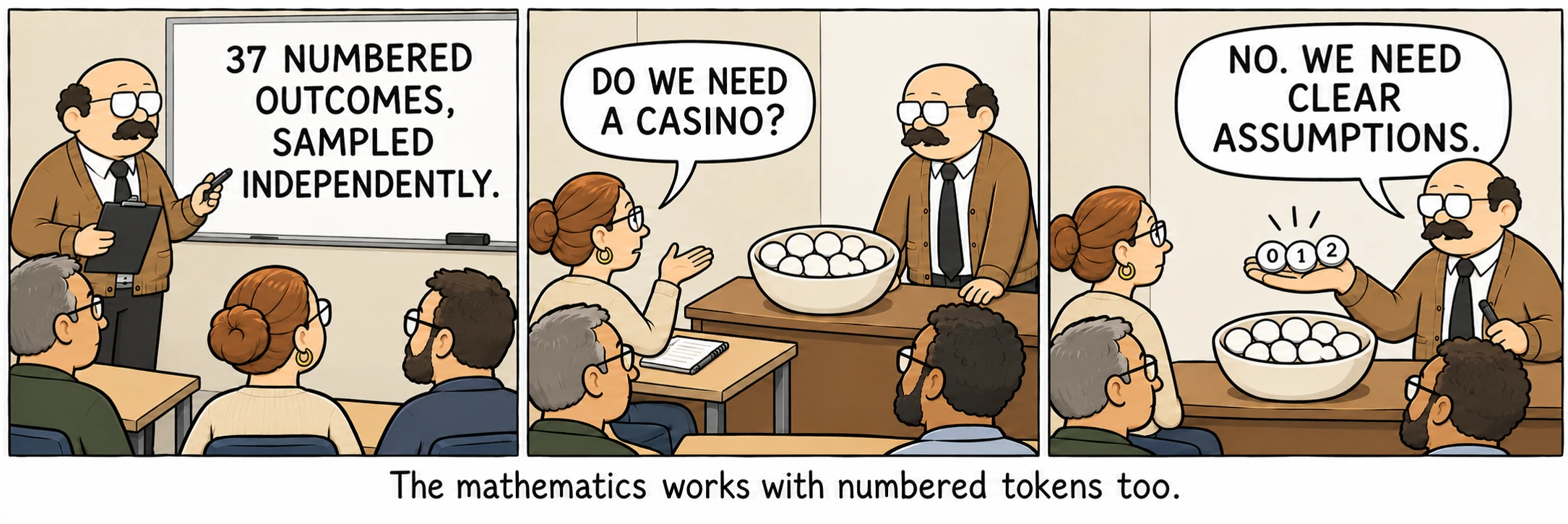
Zotsatira makumi atatu ndi zisanu ndi ziwiri, phindu limodzi la kasino, zaka mazana awiri za zolakwa zoti tiphunzirepo.
Magwero
- Feller, W. An Introduction to Probability Theory and Its Applications, Vol. 1.
- Ethier, S. N. The Doctrine of Chances: Probabilistic Aspects of Gambling.